
In and Out: Walking a Prayer Labyrinth
For much of my life, I’ve had a “heady” faith. I love to study and teach Scripture. But in these stormy times, when my body ignores my mind and goes into its freeze/flight alert, I need to find ways for God to infiltrate every part of me through movement and my five senses to remind me that “all shall be well” even if it isn’t right now.
One such “embodying” practice is walking a prayer labyrinth. A prayer labyrinth, an ancient practice going back to the fourth century, is a circular path winding into a center symbolizing the heart of God and the love of Christ. It was created for Christians who couldn’t go on long, costly, and often dangerous pilgrimages to Jerusalem.
Bill’s building one for me (want to try it?) at Whisper Woods Lake.
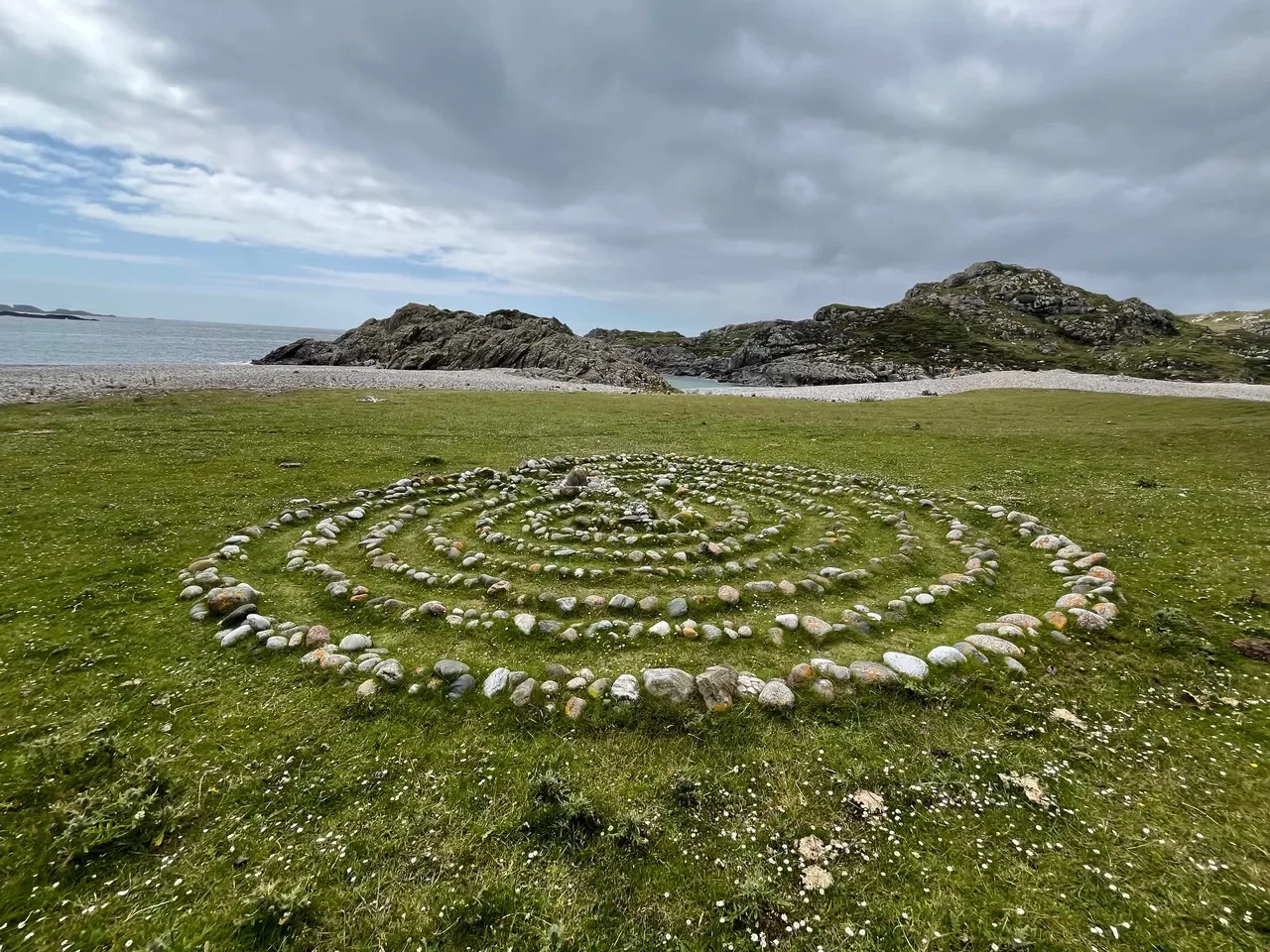
One of my favorite labyrinths is a simple rock-lined, grass-filled concentric path at St. Columba Bay on the Isle of Iona. (See photo above.) We shared it with cows, sheep, and the memories of the Irish monks who arrived at that Scottish island in 563 AD.
Releasing, Receiving, Returning
People often walk a labyrinth as a way to wrestle and release their concerns. The path inward has detours, twists, and turns, but ultimately, there is only one way to reach the center. It mirrors our own faith journey. (At least mine.) At the center, it’s a time to rest and receive the love of Christ. They return by the same path back to the world with a renewed sense of God’s presence.
This follows the powerful pattern of Scripture. Centripetal (God drawing us in with love and unity) and centrifugal (sending us out in love and power). In the Old Testament, God draws together and forms his people. In the New Testament, God sends his disciples into the world with the love and message of Christ.
A labyrinth reflects that in-and-out rhythm—remembering and receiving His love, returning and giving that love.
I love how Carrie Newcomer describes it:
“A labyrinth is not a maze. A maze is a symbol of life without meaning, it is an agent of confusion, deception with dead ends that lead you nowhere. But a labyrinth is a symbol of a life of deeper meaning, an on-going sacred journey leading us inward, outward, and to greater wholeness.”
Labyrinths can be found in cathedrals, church courtyards, gardens, fields, and parks. You can even print out a “finger labyrinth” to use as a contemplative tool. Click herefor a template.
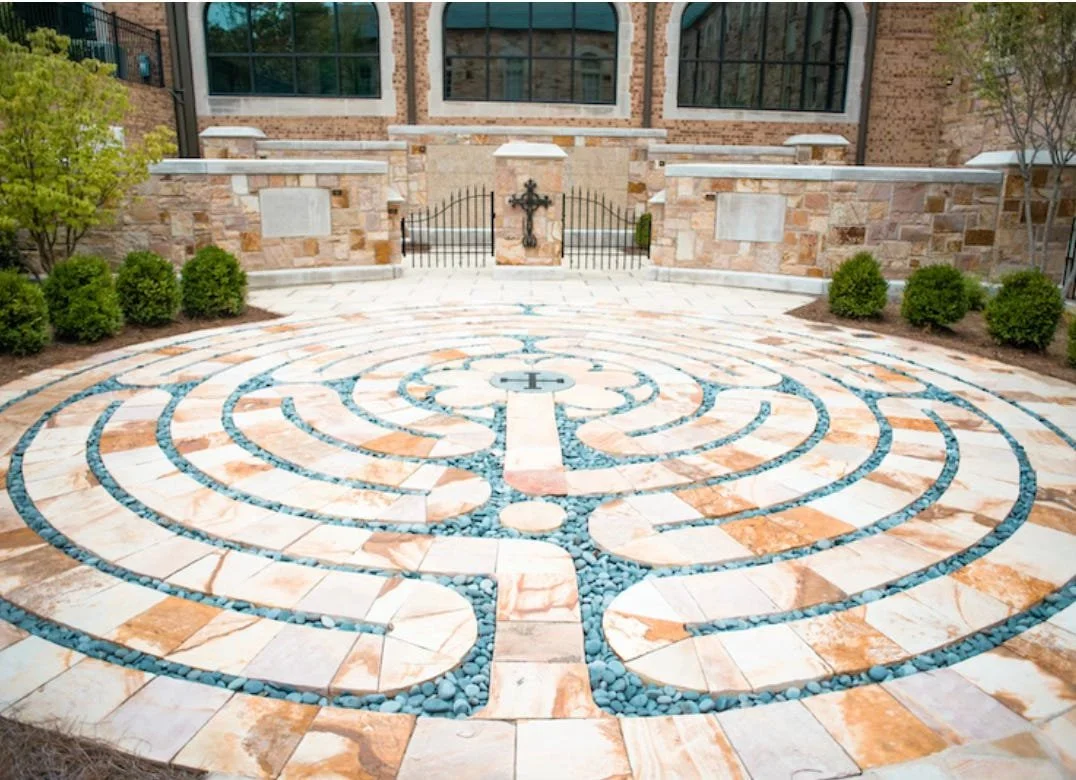
You can find beautiful prayer labyrinths in Birmingham. (Most welcome visitors but it’s always nice to check.) Local churches with labyrinths include: Asbury United Methodist, Independent Presbyterian, St. Luke’s Episcopal, St. Stephen’s Episcopal, and Trinity United Methodist (pictured below).
God ahead, God behind, God be on the path I wind…God above, God below, God be everywhere I go.” - Celtic Prayer
Charlotte Donlon will lead a retreat for clergy, therapists, and spiritual directors on April 15 at Birmingham’s St. Stephen's Episcopal Church that will include walking the church’s labyrinth. Link here for registration information.